How to Winterize Your Jetter and Protect Your Investment
HomeNewsHow to Winterize Your Jetter and Protect Your Investment
How to Winterize Your Jetter and Protect Your Investment
Winter poses one of the greatest risks to high-pressure jetting equipment. A single overnight freeze can damage pumps, fittings, valves, and hoses—leading to costly repairs and unnecessary downtime. Many operators unintentionally skip winterizing because they’re rushed, unfamiliar with seasonal procedures, or don’t spot early warning signs of freeze exposure. Fortunately, winterizing a Harben Jetter equipped with an antifreeze system is straightforward when done correctly—and it can save thousands in avoidable damage.
This guide explains why winterizing is often missed, what to do before attempting to start a cold Jetter, how to properly thaw a frozen unit, what types of repairs are possible, and a simplified version of the winterizing steps.
Why Winterizing Gets Overlooked
Even experienced teams occasionally skip or shorten winterizing. The most common reasons include:
End-of-day time pressure – Work runs long, temperatures drop quickly, or operators rush to wrap up.
Mild daytime weather – Units can freeze even when daytime temps seem safe; overnight lows catch many by surprise.
Unclear responsibility – Operators may assume someone else on the crew winterized the unit.
Inconsistent training – New employees may not know the correct process or understand the risks.
Regardless of the cause, missing winterization even once can lead to cracked components, seized pumps, and expensive downtime.
Safety First: Never Force-Start a Frozen Unit
If the Jetter has been exposed to freezing temperatures, do not attempt to start the pump. A force-start can:
Snap internal pump parts
Destroy seals
Damage bearings and connecting rods
Cause immediate permanent pump failure
A pump that is frozen internally may still turn on electrically, giving the illusion of normal function—right up until catastrophic damage occurs.
When in doubt, thaw first. Never test it by starting.
WINTERIZING PROCEDURES:
Take the following steps for winterizing a Harben High Pressure Water Jetter equipped with an antifreeze system:
Close the Water Shut Off Valve located on the inlet line from the water tank.
Open drain valve and drain water tank, leave valve open
Open antifreeze tank ball valve
Connect jetting hose to recirculation line fitting located below the hose reel
Ensure the recirculation ball valve has its handle in the vertical position
Ensure the jump jet valve is off.
Ensure the flow diverter valve is closed. (turn knob fully clockwise)
Turn on Jetter and engage the water for 4 seconds.
Turn the jump jet valve to “on” position.
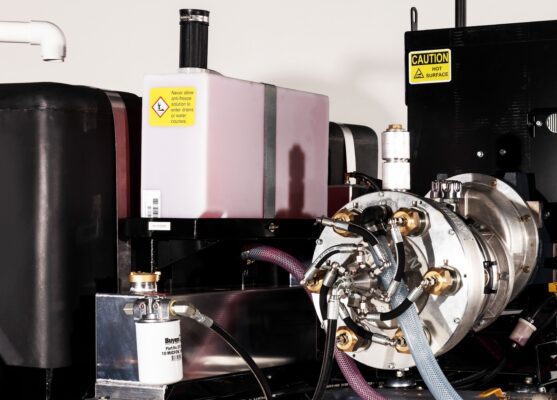
Watch the clear braided jump jet hose running up the back of the tank. Once it fills with antifreeze immediately turn the jump jet valve to “off” position this should take approximately 4 seconds.
Turn the handle to the recirculation ball valve to the horizontal position and watch for the second of the clear braided hoses running up the back of the tank to turn the color of the antifreeze. Once it has changed color quickly turn the recirculation ball valve back to the vertical position.
Turn off the Jetter
After all the water has been drained from the tank close the drain valve.
With antifreeze valve still open, quickly open and close the water shut off valve allowing some antifreeze to enter suction inlet line.
TO DE-WINTERIZE THE UNIT:
Shut the anti-freeze valve.
Shut the drain valve.
The handle for the 2-way ball valve should be in the horizontal position.
Open the tank isolation valve.
Re-fill the water storage tank.
Put jump jet valve into the ‘off’ position.
Start the engine at idle with the selector on ‘HIGH-PRESSURE’. (If on radio put water on as soon as the engine starts.)
As the antifreeze mix reaches the top of the tank turn engine off. (Regularly check the strength of the antifreeze mixture ensuring it is at least a 50/50 mix)
Place the jump jet valve in the on position.
The machine can now be used in the normal manner.
Repairs: What’s Possible if Freeze Damage Occurs
Damage from running a frozen pump doesn’t always mean a total loss. Depending on severity, technicians may be able to repair:
Ruptured hoses
Split fittings and valves
Cracked pump heads
Damaged seals and o-rings
Pressure regulator issues
If the pump ran while frozen, repairs can become more extensive—sometimes requiring pump replacement. Early diagnosis and stopping operation immediately greatly reduce repair costs.
Winterizing your Harben Jetter is one of the simplest and most effective ways to prevent freeze-related failures and expensive downtime. By understanding why winterization gets skipped, knowing the dangers of force-starting a frozen pump, using proper thawing methods, and following the streamlined winterizing steps, you can protect your equipment and ensure reliable performance throughout the cold season.